Garvin Law Firm Blog Posts Tagged ‘Florida’

Supreme Court Rules No Life Sentences for Florida Juveniles

Monday, November 1st, 2010

In May, the U.S. Supreme Court ruled that juveniles who commit crimes in which no one is killed can’t be sentenced to life in prison without the possibility of parole.

payday loans lenders online

In the 6-3 majority opinion, Justice Anthony Kennedy wrote that the Eighth Amendment, which bans cruel and unusual punishment, forbids such sentences. The state must give youths “some meaningful opportunity to obtain release based on demonstrated maturity and rehabilitation,” Justice Kennedy wrote.

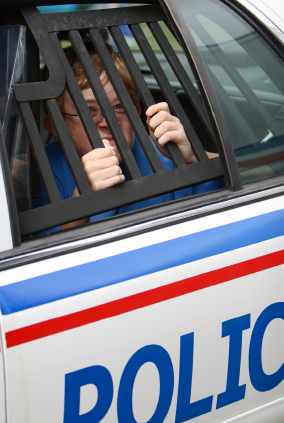
Fort Lauderdale Florida Juvenile Crime LawyerThe case, Graham v. Florida, involved Terrance Graham, who in 2003 robbed a Jacksonville restaurant at age 16 with an accomplice. Sentenced to probation, Graham was arrested a year later for a home invasion robbery and sentenced in 2005 to life in prison for violating probation. The case was argued before the high court in November 2009.

According to California Sen. Leland Yee, also trained as a child psychologist: “The high court has consistently recognized that children have a greater capacity for rehabilitation than adults. The neuroscience is clear; brain maturation continues well through adolescence and thus impulse control, planning, and critical thinking skills are still not yet fully developed.”

In 2005, the U.S. Supreme Court barred death sentences for crimes committed by juveniles under the age of 18.

Because of the ruling, 23 juvenile offenders in Miami-Dade and Broward counties alone must now be resentenced, and more than 100 statewide — the most in the nation.

This leaves Florida in a dilemma: it has no parole system. It was eliminated in 1983, on the reasoning that too many former inmates were committing serious crimes after being released early. Now, the state reviews only cases before 1983.

State prosecutors and legislators are scrambling for ways to meet the new court mandate, while preventing violent offenders from being released.

Florida Rep. Mike Weinstein, R-Jacksonville, says he plans to introduce a bill next year to create a parole system for violent juvenile offenders, who would be eligible after 25 years in prison. They would get a hearing every seven years, providing they have “demonstrated maturity and reform,” he says.

The Florida Prosecuting Attorneys Association (FPAA) has petitioned the state’s Executive Clemency Board to commute the sentences in question to life with the possibility of parole, with each case reviewed after 20 years. But Gov. Charlie Crist, in the middle of a tough U.S. Senate election campaign, is opposed, fearing offenders “not posing an imminent threat to Floridians, will receive parole and be released sooner, returning to our cities and streets,” spokesman Sterling Ivey recently told The Miami Herald.

But that leaves the issue unsolved, and because of the court decision, inaction is not an option.

For the time being, it’s left up to trial judges to decide how to resentence each defendant. FPAA president Bill Cervone, of Gainesville, says he’s concerned that will lead to “a mish-mash of results all over the state.”

Nancy Daniels, Leon County Public Defender and president of the Florida Public Defender Association. says, “There is a lot of fear right now. What if a judge just says, ‘OK, they’re not going to get a life sentence,’ but gives a 60-year sentence? That’s the functional equivalent of a life sentence.”

Florida Law Attempts to Reign in Pain Clinics

Tuesday, September 28th, 2010

Nearly two years ago, a post here discussed the growing problem of unregulated pain-management clinics, so-called “pill mills,” and how South Florida – Broward County in particular – was ground zero.

According to the Centers for Disease Control, overdose deaths from painkillers are rivaling the No. 1 killer, traffic accidents. It attributes much of the increase to the overuse of prescription opiates such as OxyContin and Vicodin. In Florida, deaths from prescription-drug use rose from 2,780 in 2006 to 3,750 in 2008 – more than cocaine, according to the Florida Medical Examiners Commission.

You don’t even have to be a doctor to run a pain-management clinic. “You need a background check to get a liquor license — you can’t be a convicted felon and open up a bar — but you can be a convicted felon and open up a pain clinic,” says Broward Sheriff Al Lamberti.

Fort Lauderdale Drug Trafficking Attorney at Law

But starting Oct. 1, 2010, a new law will go into effect that takes steps to regulate the clinics and punish offending doctors, although some think it isn’t far-reaching enough.

“No bill is perfect, but this lets the Department of Health and the police regulate, inspect, shut down and discipline [clinics and doctors] operating blatantly outside the legitimate practice of medicine,” says Bruce D. Grant, director of the Florida Office of Drug Control.

The law allows police to inspect patient files for violations without a warrant and enforces penalties for doctors, who can be charged with third-degree felonies and fined up to $5,000 a day of violations. Every clinic must be directed by a doctor with a clean record.

In addition, clinics are limited to selling patients only three days of pills at a time, making it more difficult for dealers who pay patients to buy drugs (however, clinics can get around the rule by charging more for an office visit and giving the pills away, skeptics point out). In 2009, members of the Bonanno crime family were charged with using pain clinics to distribute prescription drugs.

Still, the bill does not require the clinics to do criminal background checks on owners and employees, as other health clinics must.

And although the state has approved a database to track pill dispensing, there is no dedicated, ongoing funding source. Bruce Grant said that more than $500,000 in donations has been raised to pay for the prescription-tracking program, with three months to go in the campaign. The goal is to raise $1 million.

Laws for drug possession and abuse have grown progressively harsher, while the source has not been adequately addressed; according to an FBI report, 82.3 percent of all drug arrests in 2008 were for possession.

Now South Florida’s nearly 200 pain clinics and dozens of OxyContin-dispensing doctors, which have operated with no legal scrutiny, will face some accountability.

Smile! You’re on Camera Running a Red Light

Sunday, September 19th, 2010

As of September 8, running a red light at some Broward County intersections will be captured on camera, and subject to a $158 fine.

In May, Gov. Charlie Crist signed HB 325 into law, authorizing local governments to use the cameras as enforcement devices, setting statewide standards and traffic fines for them.

The vehicle owner will receive a citation in the mail, but won’t be issued a traffic violation, so no license points; the owner can appeal the fine. The driver won’t be ticketed for rolling stops, or slowing down and approaching the intersection with caution. Drivers should note, though, that cities have 30 days to send the violations, so you could rack up multiple offenses that all arrive in the mail a month later.

Fort Lauderdale Red Light Camera Law FirmThe city of Fort Lauderdale has approved cameras in 10 locations and so far installed six.

Some Broward cities, including Pembroke Pines and Hallandale Beach, have been using cameras, and now must comply with the new state standards. That’s a plus – before the bill’s enactment, cities could fine anyone who didn’t come to a full stop before turning at an intersection with a camera.

Pines Mayor Frank Ortis, a big fan of the cameras, said that since one was installed at 129th Avenue and Pines Boulevard in 2008, there’s been a dramatic change in the incidence of red-light runners.

“My whole goal was to save lives,” Ortis said.

In fact, the bill’s proponents urged its passage as a life-saving measure. It is named the Mark Wandall Traffic Safety Act for a Bradenton man killed in 2003 by a driver who ran a red light. Wandall’s wife, Melissa, has been pressing for the bill ever since.

“This bill will curb the behavior of red-light running,” she told the Sun-Sentinel in an interview after the bill was passed in April. “That’s what this is about, reducing crashes and fatalities at intersections.”

Using covers, tints, or any other tricks to obscure your license plate could get you in even more trouble than running a light; Florida law requires that your entire plate be visible, and use of covers is illegal on roadways.

Aventura was the first South Florida city to install intersection cameras, in 2008. In Broward, they’ve been approved in Hollywood, Davie, Coral Springs and, most recently, Plantation. Margate and Tamarac are also considering them.

Despite all this enthusiasm for the new law, the motive being purely about public safety has been questioned. In a recent editorial, Miami Herald columnist Daniel Shoer Roth expressed skepticism, pointing how expensive it is to appeal a ticket and nearly impossible to win, discouraging challenges.  He agreed with others who believe the real motive is an easy revenue source.

The roadblocks to fighting a camera-issued citation have not prevented challenges to the law’s constitutionality, although Crist has expressed confidence the state is on solid legal ground. Stay tuned.

Top Ten Reasons Videotaping Cops Should be Legal

Thursday, July 1st, 2010

After a recent string of arrests for videotaping law enforcement officers, the internet has been buzzing with talk over whether or not it should be legal to videotape police officers while they are performing their duties. Depending on the state that you are located in, the penalty could either be a misdemeanor or even a felony. Take a look at Carlos Millers story on the South Florida model who was jailed overnight and originally charged with a felony for videotaping Boynton Beach Police Officers in 2009.

Law enforcement officers all over the U.S. argue that being filmed interferes with their investigation and is a danger to their safety. This position of police officers however, must be balanced with the safety and constitutional rights of civilians who all to often become the victim of over zealous police misconduct.

Lets take a look back at some of the more recent videos which further enforce the point that videotaping Cops should always be legal.

10. Police Brutality: Cop Slams Elderly Woman’s Head On The Concrete.

9. Police Brutality at Ultra Music Festival, Miami, 2007

Cop beating the crap out of some guy. I am sure the guy was on drugs, maybe even dealing drugs. Still doesnt warrant the cop beating him sensless. This clip is only the middle of the fight. I didnt have my phone ready and I stopped right as the crowd started to react to the violence. Added: It seems from reading the comments there are some people saying that this does not look like brutality. What the video does not show is the beginning part that grabbed my attention in the first place; which was the cop jumping the guy and punching him several times, thus the bloody nose.

8. Woman arrested for DWI, beat by police off camera

A police officer has been fired after an incident in which a female prisoner, who was taken into custody on suspicion of DWI, wound up lying on the police station floor in a pool of blood. Much of what happened was recorded on a videotape, but there is a gap of undetermined length.

7. South Carolina Police Brutality

6. Fort Lauderdale PD police brutality

5. Surveillance video shows Fort Lauderdale police beating man in elevator

After a beat down in an elevator, Joshua Daniel Ortiz ended up with his nose broken and facing a charge of battering a Fort Lauderdale police officer. The 22-year-old man was surprised and delighted to learn Wednesday that Broward prosecutors were dropping the case against him after reviewing an elevator surveillance video showing three officers aggressively rush and beat Ortiz to the ground.

4. Utah Police Brutality

“Comes back at me, and falls down on the freaking ground…. Yeah, he just fell here and passed out.” – Millard County deputy Crete Carter

3. Hollywood PD Frame Driver On Tape!

“We’re going to bend this a little bit” – Officer Dewey Pressley, a 21 yearr veteran

2. SFPD Officer Threatens to Break Skater’s Arm “Like a Twig”

1. Rodney King

Leland E. Garvin Named to Florida Super Lawyers Rising Stars

Friday, June 25th, 2010

Top Young Lawyers in Fort Lauderdale

The Garvin Law Firm in proud to announce that Leland E. Garvin has recently been named by Florida Super Lawyers magazine as one of the Top Young Lawyers in Florida for 2010. Only2.5 percent of the lawyers in the state are selected by Super Lawyers for this list.


Each year lawyers are asked to nominate the best attorneys who are 40 or under, or who have been practicing for 10 years or less. They are instructed to nominate lawyers they have personally observed in action — whether as opposing counsel or co-counsel, or through other firsthand courtroom observation.

After these nominations are submitted, the research team at Super Lawyers undertakes an independent evaluation of candidates by the attorney-led research staff along with a good-standing and disciplinary check with the Florida Bar.

Leland is a former State Prosecutor, who practices in Criminal Defense and Personal Injury Law from his office in Fort Lauderdale, Florida. Recently he was also Selected as “one of the best up and coming attorneys”  in the state of Florida by Florida Trend Magazine.

-Leland can be reached by dialing (954) 524-2424 or via email at: lgarvin@garvinlegal.com.


Tiger Woods and the Importance of the 5th & 6th Amendments

Wednesday, December 2nd, 2009

I received a call the other day from a friend who told me that I should write a blog post about the recent Tiger Woods auto accident issue. I was trying to think of what to write and figured that the issue may be a little overexposed, when it came to me. Tiger’s recent “run in” with law gives me the perfect opportunity to point out the importance of the Fifth and even more important Sixth Amendments to the United States Constitution.

The Fifth Amendment reads in part that no person “shall be compelled in any criminal case to be a witness against himself”. In layman’s terms means that you don’t have to talk to law enforcement if the answers to the questions could incriminate you. In Tiger’s case he didn’t make any statements and further he was a no-show at the FHP station (a few times) when he was asked to come in for a physical examination and questioning. Clearly, the Florida Highway Patrol didn’t have much in the way of incriminating evidence (other than for a traffic ticket); but were hoping that Tiger would come in and give them their case on a silver platter. Also, the police wanted to see his injuries and determine if they were “Serious Bodily Injuries” and would thus warrant greater punishment in the State of Florida.

While Tiger’s no-show at the FHP station might have been rude, it just might have saved him his driver’s license or better yet, his clean criminal record. In Florida if a driver is found to be at-fault for causing an auto accident and the injuries are determined to be “Serious”; he or she is at risk of losing their license for a period of 1 year.

While Mr. Woods might have known this information on his own, it is more likely that he consulted a Florida criminal defense attorney who helped guide him through this difficult and nerve-racking process. This brings me to the Sixth Amendment; that is the right to have the assistance of counsel. Unlike the Fifth Amendment which (after being invoked) allows law enforcement to keep questioning a suspect at a later time, the Sixth stays with a suspect for the entire length of any prosecution. In short, when an individual “pleads the Fifth”, law enforcement is allowed to come back and resume questioning but once a suspect says “I want a Lawyer” Law enforcement must cease any and all questioning until a lawyer is provided.

While you may never have the ability to control the golf course like Tiger you should now be able to take control of any law enforcement questioning and keep the prosecution from scoring a “hole in one”

Be like Tiger, Plead the Fifth and consult with a lawyer next time you find yourself in a jam.

Broward County Judge Throws out DUI Test Results

Monday, August 24th, 2009

Last week Broward County Court Judge Lee Jay Seidman concluded a four-day hearing by ruling that the accuracy of many breath tests using the Intoxilyzer 8000 has been “fatally compromised.”

The Intoxilyzer 8000 is the most recent version of a device that is designed to detect the percentage of alcohol in the breath of a suspect who has been arrested upon suspicion of drunk driving; this device is commonly referred to as a breathalyzer. Pursuant to Florida law these machines must be periodically inspected and certified for accuracy by the Florida Department of Law Enforcement.

Previous to this ruling F.D.L.E. inspector, Sandra Vegia, testified that during her inspections of the Intoxilyzer she would commonly cut off the power to the device if it did not meet specifications and then conduct the inspection a second time with the hopes of receiving a passing score.

In addition to ruling that state law “was not substantially complied with” Judge Seidman went on to say that “Moreover and certainly more troubling is the further finding that fraudulent practices and the systematic intentional destruction of evidence occurred regarding these state-regulated breath alcFort Lauderdale DUI Lawyers get breathlyzer test results throw outohol testing machines.”

While Judges in Monroe, Manatee, and Sarasota counties have already ruled that the Intoxilyzer 8000 results are not admissible in a criminal prosecution, Judge Seidman is the first Broward Judge to make this ruling. His ruling will only apply to DUI cases that occurred from 2007 through the summer of 1008.

Broward criminal defense lawyers are anxiously awaiting the rulings of many other Fort Lauderdale county court judges who have yet to weigh in the matter. Meanwhile, DUI Attorneys in Palm Beach are preparing to file these same motions on cases involving the Intoxilyzer 8000.

Southwest Florida Trial Lawyer, Jeffrey Garvin sworn in as FLABOTA President

Wednesday, August 5th, 2009

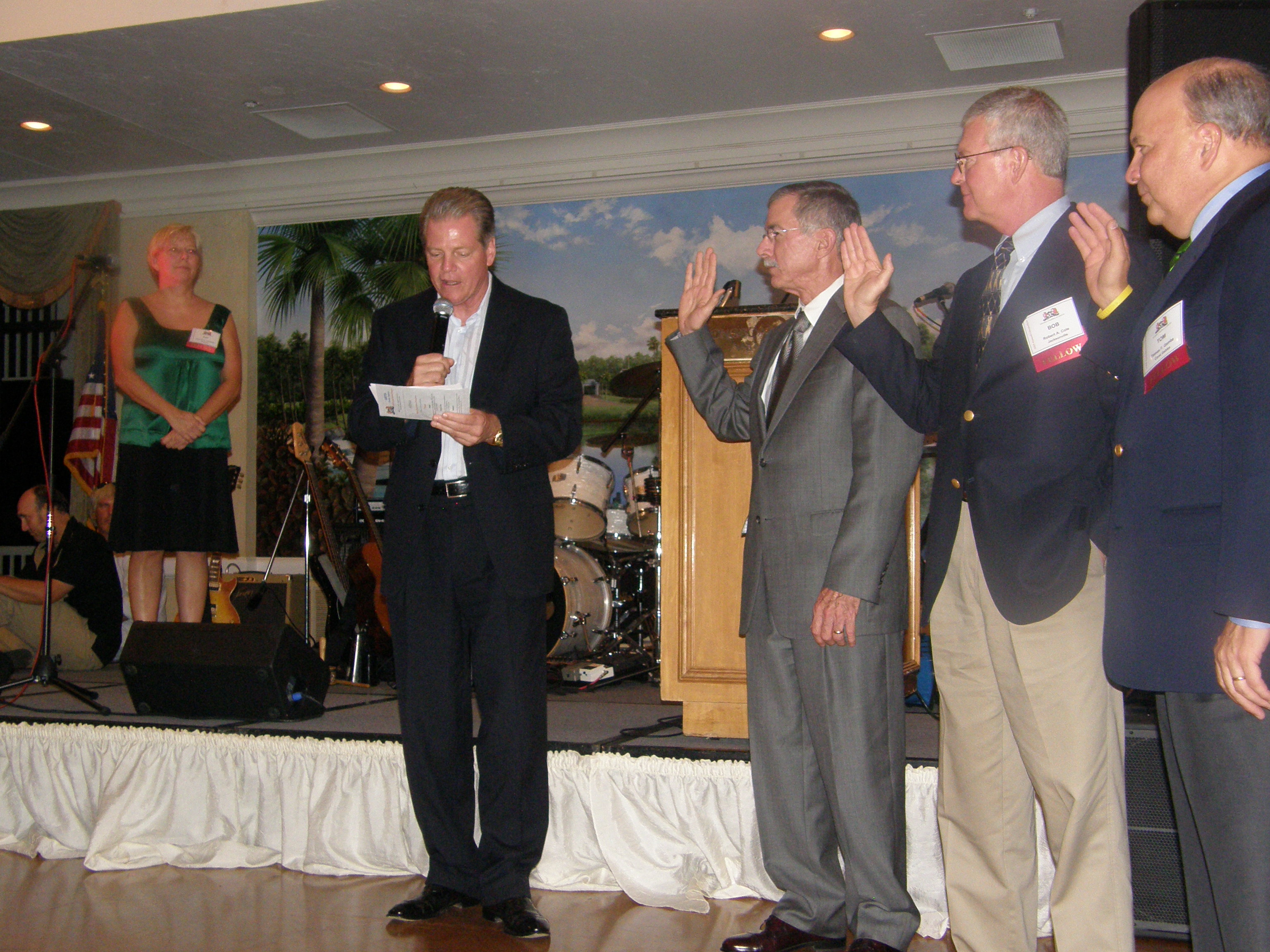
The Garvin Law Firm is proud to announce that Fort Myers attorney Jeff Garvin was sworn in as President of the Florida Chapter of the American Board of Trial Advocates at its Annual Convention in Longboat Key, Florida on July 25th.

Jeff Garvin Sworn in as FLABOTA President

ABOTA is an invitation only national organization of trial   attorneys dedicated to preserving the independence of the judiciary and the right to trial by jury.

At the convention, Mr. Garvin spoke on the topic of the cross examination of expert witnesses.

Also sworn in were Bob Cole of Jacksonville as President-elect and Tom Gamba of Miami as Treasurer


New Florida Seat Belt Law Goes Into Effect Today

Tuesday, June 30th, 2009

Until now, drivers could only be cited for not wearing seat belts if they were pulled over for something else, such as speeding.

That changes today with the passage of the Dori Slosberg and Katie Marchetti Safety Belt Law. With the passage of this new law a Florida driver who is not wearing a seat belt can be pulled over and issued a traffic citation for a nonmoving violation.

The state fine for a seatbelt violation will be $35, and each county may impose additional fines and court fees as well. Drivers and passengers who are found in violation of the new law are subject to a $114 fine in Miami-Dade County and $115 fine in Broward County.

This law is named in memory of two Florida teens that were killed in separate traffic accidents and died as a result of not wearing their seatbelts.

There are some exemptions to the new law, for instance a traffic ticket cannot be issued if an occupant has a doctor’s note, drives a trash truck, deliver newspapers, or is in the back of a pick-up truck.

Broward County Sheriff Begins Traffic Ticket Blitz

Monday, March 16th, 2009

Starting this morning (3/16/09), Broward Sheriff’s Office deputies and state troopers will be conducting a ticket blitz in western Broward County.

Squads will be on Interstates 75 and 595 and on the Sawgrass Expressway from 8 a.m. to 2 p.m. Monday, Tuesday and Wednesday. On Thursday, the officers will patrol those highways from 2 p.m. to 10 p.m.

The joint operation, which targets aggressive motorists and violators of the “Move Over” law and seatbelt requirement, will continue for four days, according to Sheriff’s Office spokesman Mike Jachles.

For more information visit our page on traffic ticket defense.

.