Garvin Law Firm Blog Posts Tagged ‘Florida Law’

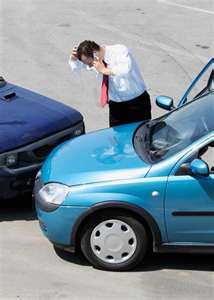
$10,000 for Anyone Involved in a Car Accident ?

Friday, August 12th, 2011

PIP (No-Fault) insurance in Florida

Sound too good to be true? Well it probably is…We’ve all heard the catchy jingles on our favorite radio stations announcing that after a car accident, we may be entitled to $10,000 in lost wages and benefits. DJ’s and “attorney spokesmen” encourage us to call one of these hot-lines from the scene of the accident—but is what they’re selling us for real?

The long and short answer is: Yes and No (answered like a true lawyer…I know.), but we realize, you probably already knew that. Many people, especially in South Florida, come to personal injury attorneys after even a minimal car accident looking for the $10,000 check that they’ve been hearing about on the radio or billboards.
What all these advertisements are referring to is your PIP (or Personal Injury Protection) Insurance, also referred to as No Fault Insurance. This insurance, which has long been the center of fierce debate in Florida, is the only type of mandatory auto insurance that Floridians are required to purchase. You may have even heard about this insurance from news reports of fraud, staged accidents, and Florida lawmakers constantly trying to regulate it in one direction or another.

According to this article on My Fox Tampa Bay, “Florida leads the nation in questionable insurance claims, which leads to you to paying more for car insurance.” And although an insurance coverage reform bill was presented in early May 2011, it was voted down by the Florida House Subcommittee on Health Care and Human Services.Fort Lauderdale Injury Lawyer

So what about my 10 grand and what is all this talk about PIP Insurance? The state of Florida is known as a “no fault” state for automobile accidents. This means if you are in an auto accident in Florida, regardless of who is at fault for the collision, you first look to your own automobile insurer to pay a portion (up to $10,000) of your medical expenses and wage loss under your PIP (Personal Injury Protection) coverage for any injuries you received in the accident. This coverage protects you against losses you sustain as a result of personal injuries from an automobile accident and pays 80% of reasonable, necessary, and related medical expenses, as well as, 60% of your gross wage loss resulting from your accident-related injuries and mileage costs for transportation to and from doctor appointments.

The only way you can become eligible for any direct PIP cash is if your doctor states that you are unable to work, and even then, you will only get 60% of your lost wages. If you can’t work, that means that you are probably really hurt and will need this PIP money to help pay your medical bills

After the $10K is exhausted,you may have the right to recover your damages from the other driver. If the negligent driver has insurance you can recover your medical expenses and lost wages and, if you meet the threshold requirements of Florida Statute 627.737 which include a permanent injury, significant scarring or death, you can pursue a claim for your pain and suffering.

Fort Myers Car Accident AttorneyThe insurance laws of the State of Florida are complicated and if your claim is not pursued correctly most insurance companies will deny (or offer a very small amount to settle) your claim. According to this investigation by Anderson Cooper and CNN; Insurance companies actually spend billions each year denying claims. To make sure that you recover all of your damages you should hire an attorney with significant experience in the field.

If you have any questions regarding Personal Injury Protection Insurance, or have recently been injured in a car accident, feel free to call our office to address any concerns you may have at 954.524.2424 in Fort Lauderdale or our Fort Myers office at 239.277.0005.

Smile! You’re on Camera Running a Red Light

Sunday, September 19th, 2010

As of September 8, running a red light at some Broward County intersections will be captured on camera, and subject to a $158 fine.

In May, Gov. Charlie Crist signed HB 325 into law, authorizing local governments to use the cameras as enforcement devices, setting statewide standards and traffic fines for them.

The vehicle owner will receive a citation in the mail, but won’t be issued a traffic violation, so no license points; the owner can appeal the fine. The driver won’t be ticketed for rolling stops, or slowing down and approaching the intersection with caution. Drivers should note, though, that cities have 30 days to send the violations, so you could rack up multiple offenses that all arrive in the mail a month later.

Fort Lauderdale Red Light Camera Law FirmThe city of Fort Lauderdale has approved cameras in 10 locations and so far installed six.

Some Broward cities, including Pembroke Pines and Hallandale Beach, have been using cameras, and now must comply with the new state standards. That’s a plus – before the bill’s enactment, cities could fine anyone who didn’t come to a full stop before turning at an intersection with a camera.

Pines Mayor Frank Ortis, a big fan of the cameras, said that since one was installed at 129th Avenue and Pines Boulevard in 2008, there’s been a dramatic change in the incidence of red-light runners.

“My whole goal was to save lives,” Ortis said.

In fact, the bill’s proponents urged its passage as a life-saving measure. It is named the Mark Wandall Traffic Safety Act for a Bradenton man killed in 2003 by a driver who ran a red light. Wandall’s wife, Melissa, has been pressing for the bill ever since.

“This bill will curb the behavior of red-light running,” she told the Sun-Sentinel in an interview after the bill was passed in April. “That’s what this is about, reducing crashes and fatalities at intersections.”

Using covers, tints, or any other tricks to obscure your license plate could get you in even more trouble than running a light; Florida law requires that your entire plate be visible, and use of covers is illegal on roadways.

Aventura was the first South Florida city to install intersection cameras, in 2008. In Broward, they’ve been approved in Hollywood, Davie, Coral Springs and, most recently, Plantation. Margate and Tamarac are also considering them.

Despite all this enthusiasm for the new law, the motive being purely about public safety has been questioned. In a recent editorial, Miami Herald columnist Daniel Shoer Roth expressed skepticism, pointing how expensive it is to appeal a ticket and nearly impossible to win, discouraging challenges.  He agreed with others who believe the real motive is an easy revenue source.

The roadblocks to fighting a camera-issued citation have not prevented challenges to the law’s constitutionality, although Crist has expressed confidence the state is on solid legal ground. Stay tuned.

Florida Supreme Court Rules no Shackles for Juvenile Delinquents

Tuesday, December 22nd, 2009

In courtrooms around the state, it has long been the practice that juveniles were to be shackled by the wrists and ankles with belly chains, chained to furniture or chained to each other when they were brought to appear before a judge.

In this 6-1 opinion, The Florida Court stated,  that this process was “repugnant, degrading, humiliating and contrary to the primary purposes of the juvenile justice system.”

One of the primary goals oFort Lauderdale Juvenile Defense Lawyerf the juvenile justice system is rehabilitation and many have argued that this process actually harms the child and can have long lasting psychological consequences.



The Florida Supreme Court, suggested that the shackling may also violate the children’s due process rights as it could be seen as cruel and unusual punishment.

A Fort Lauderdale Judge once told me that juveniles had to be shackled after two juveniles escaped as they were being transported to the courtroom. He said these juveniles, who were only handcuffed to each other, ran out front of the Broward Courthouse and each decided to run on the opposite side of a palm tree only to smack heads on the other side. The judge explained that these juveniles had serious injuries and that ever sense that day all juveniles had to be shackled. I am not sure if the judge made this up or if that was really the reason why all juvenile offenders had to be shackled.

At the time I heard the judge’s story I was working as a juvenile prosecutor and believed that juvenile delinquents were treated too lightly and I figured that they were only going to get a smack on the wrist so at least the shackling process might make them think twice before committing their next crime. Once I got out of the juvenile division I learned that even the adult defendants didn’t have to be shackled and that it wasn’t  really fair that the juveniles did.

At any rate, the Florida rules of Juvenile Procedure now state that restraints are allowed only to prevent physical harm against the child or others, if they pose a flight risk, or if they have a history of disruptive behavior in court and there are no alternatives.

Many public defenders and juvenile rights advocates around the state are very pleased with this decision; what’s your take?


.