Garvin Law Firm Blog Posts Tagged ‘Broward County’

$10,000 for Anyone Involved in a Car Accident ?

Friday, August 12th, 2011

PIP (No-Fault) insurance in Florida

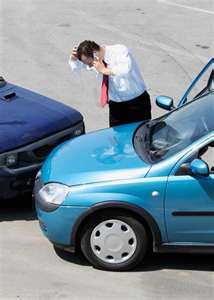
Sound too good to be true? Well it probably is…We’ve all heard the catchy jingles on our favorite radio stations announcing that after a car accident, we may be entitled to $10,000 in lost wages and benefits. DJ’s and “attorney spokesmen” encourage us to call one of these hot-lines from the scene of the accident—but is what they’re selling us for real?

The long and short answer is: Yes and No (answered like a true lawyer…I know.), but we realize, you probably already knew that. Many people, especially in South Florida, come to personal injury attorneys after even a minimal car accident looking for the $10,000 check that they’ve been hearing about on the radio or billboards.
What all these advertisements are referring to is your PIP (or Personal Injury Protection) Insurance, also referred to as No Fault Insurance. This insurance, which has long been the center of fierce debate in Florida, is the only type of mandatory auto insurance that Floridians are required to purchase. You may have even heard about this insurance from news reports of fraud, staged accidents, and Florida lawmakers constantly trying to regulate it in one direction or another.

According to this article on My Fox Tampa Bay, “Florida leads the nation in questionable insurance claims, which leads to you to paying more for car insurance.” And although an insurance coverage reform bill was presented in early May 2011, it was voted down by the Florida House Subcommittee on Health Care and Human Services.Fort Lauderdale Injury Lawyer

So what about my 10 grand and what is all this talk about PIP Insurance? The state of Florida is known as a “no fault” state for automobile accidents. This means if you are in an auto accident in Florida, regardless of who is at fault for the collision, you first look to your own automobile insurer to pay a portion (up to $10,000) of your medical expenses and wage loss under your PIP (Personal Injury Protection) coverage for any injuries you received in the accident. This coverage protects you against losses you sustain as a result of personal injuries from an automobile accident and pays 80% of reasonable, necessary, and related medical expenses, as well as, 60% of your gross wage loss resulting from your accident-related injuries and mileage costs for transportation to and from doctor appointments.

The only way you can become eligible for any direct PIP cash is if your doctor states that you are unable to work, and even then, you will only get 60% of your lost wages. If you can’t work, that means that you are probably really hurt and will need this PIP money to help pay your medical bills

After the $10K is exhausted,you may have the right to recover your damages from the other driver. If the negligent driver has insurance you can recover your medical expenses and lost wages and, if you meet the threshold requirements of Florida Statute 627.737 which include a permanent injury, significant scarring or death, you can pursue a claim for your pain and suffering.

Fort Myers Car Accident AttorneyThe insurance laws of the State of Florida are complicated and if your claim is not pursued correctly most insurance companies will deny (or offer a very small amount to settle) your claim. According to this investigation by Anderson Cooper and CNN; Insurance companies actually spend billions each year denying claims. To make sure that you recover all of your damages you should hire an attorney with significant experience in the field.

If you have any questions regarding Personal Injury Protection Insurance, or have recently been injured in a car accident, feel free to call our office to address any concerns you may have at 954.524.2424 in Fort Lauderdale or our Fort Myers office at 239.277.0005.

8 Quick Tips for Avoiding a DUI over the Holiday Season

Thursday, December 23rd, 2010

For the most of us, the possibility of getting a DUI increases during the holidays.

The holidays are a time when we attempt to leave work at work and spend some quality time with the ones we love. The holidays also include parties and a drink or two with old friends.

I8 Tips for Avoiding a DUI over the Holiday Seasonn this post I wanted to pass on a few tips from the trenches during my experience as a prosecutor and now Florida DUI Defense Lawyer.
Tip 1. Don’t drink! Ok, this is an easy one but I felt obligated to include it in the post. Driving after you’ve had too many will not only cost you a lot of money but it could cost you your job and possibly your life, or the life of another.

Tip 2. If you insist on drinking alcohol, be smart about it.  Eat enough food to have a full stomach and watch those drinks. For a 120 pound female 3 beers/shots/glasses of wine in an hour and your right at .08 (Florida’s legal limit).Take a look at this link for a blood alcohol calculator and figure out your limit.

Tip 3. Make sure your vehicle is in good working order, your driver’s license is valid, and your registration is current. An expired tag or a bad tail light is a sure-fire way to get pulled over and peppered with questions from a law enforcement officer. If you live in Florida, you can quickly check the status of your driver’s license at the Florida Department of Highway Safety and Motor Vehicles website.

Tip 4. Obey every traffic law to the “T”. This means: no rolling stops, signaling every time you switch lanes, and keeping it between the lines.

Tip 5. If you decide to “sleep it off” in your car, make sure that the car is not running and the keys are nowhere near the ignition. I know it’s cold and the heat would feel so nice but don’t risk it. In Florida, a person can be prosecuted for DUI if they are in “actual physical control” of the vehicle; this has been interpreted to mean the ability to control use and non-use (aka. drive the vehicle if you wanted to). Throw those keys in the bushes!

Tip 6. If you do get pulled over, make sure that you have your driver’s license, insurance, and registration ready to hand to the officer. Fumbling and searching for this information is the first thing the officer will write in the police report.

Tip 7. Check the local paper and watch the news for any mention of a planned checkpoint stop. Not only will this add time to your commute but who wants to stand on one leg , touch your nose, or walk a straight line if it can be easily avoided.

Tip 8. Stay off your cell phone and leave the radio where it is; it doesn’t matter if you hate “Grandma got runned over by a reindeer”; Just let it play. You need to be focused on your driving; too many people die each year from Texting and Driving alone, add alcohol to into the mix and the results are incredibly deadly.

Not only will having a designated driver keep you from getting a DUI but it just might save a life . Impaired driving could not only ruin your life but it could ruin (or even end) the life of another.

I hope everyone has an amazing: Christmas, Chanukah, Kwanza, and any other holiday I forgot. In the event that your holiday season takes a turn for the worse, the Garvin Law Firm is here and ready to act in court on your behalf; we can help pick up the pieces and get things back on track; whether your facing a Criminal Arrest or injured an Auto Accident.


Supreme Court Rules No Life Sentences for Florida Juveniles

Monday, November 1st, 2010

In May, the U.S. Supreme Court ruled that juveniles who commit crimes in which no one is killed can’t be sentenced to life in prison without the possibility of parole.

In the 6-3 majority opinion, Justice Anthony Kennedy wrote that the Eighth Amendment, which bans cruel and unusual punishment, forbids such sentences. The state must give youths “some meaningful opportunity to obtain release based on demonstrated maturity and rehabilitation,” Justice Kennedy wrote.

Fort Lauderdale Florida Juvenile Crime LawyerThe case, Graham v. Florida, involved Terrance Graham, who in 2003 robbed a Jacksonville restaurant at age 16 with an accomplice. Sentenced to probation, Graham was arrested a year later for a home invasion robbery and sentenced in 2005 to life in prison for violating probation. The case was argued before the high court in November 2009.

According to California Sen. Leland Yee, also trained as a child psychologist: “The high court has consistently recognized that children have a greater capacity for rehabilitation than adults. The neuroscience is clear; brain maturation continues well through adolescence and thus impulse control, planning, and critical thinking skills are still not yet fully developed.”

In 2005, the U.S. Supreme Court barred death sentences for crimes committed by juveniles under the age of 18.

Because of the ruling, 23 juvenile offenders in Miami-Dade and Broward counties alone must now be resentenced, and more than 100 statewide — the most in the nation.

This leaves Florida in a dilemma: it has no parole system. It was eliminated in 1983, on the reasoning that too many former inmates were committing serious crimes after being released early. Now, the state reviews only cases before 1983.

State prosecutors and legislators are scrambling for ways to meet the new court mandate, while preventing violent offenders from being released.

Florida Rep. Mike Weinstein, R-Jacksonville, says he plans to introduce a bill next year to create a parole system for violent juvenile offenders, who would be eligible after 25 years in prison. They would get a hearing every seven years, providing they have “demonstrated maturity and reform,” he says.

The Florida Prosecuting Attorneys Association (FPAA) has petitioned the state’s Executive Clemency Board to commute the sentences in question to life with the possibility of parole, with each case reviewed after 20 years. But Gov. Charlie Crist, in the middle of a tough U.S. Senate election campaign, is opposed, fearing offenders “not posing an imminent threat to Floridians, will receive parole and be released sooner, returning to our cities and streets,” spokesman Sterling Ivey recently told The Miami Herald.

But that leaves the issue unsolved, and because of the court decision, inaction is not an option.

For the time being, it’s left up to trial judges to decide how to resentence each defendant. FPAA president Bill Cervone, of Gainesville, says he’s concerned that will lead to “a mish-mash of results all over the state.”

Nancy Daniels, Leon County Public Defender and president of the Florida Public Defender Association. says, “There is a lot of fear right now. What if a judge just says, ‘OK, they’re not going to get a life sentence,’ but gives a 60-year sentence? That’s the functional equivalent of a life sentence.”

Florida Law Attempts to Reign in Pain Clinics

Tuesday, September 28th, 2010

Nearly two years ago, a post here discussed the growing problem of unregulated pain-management clinics, so-called “pill mills,” and how South Florida – Broward County in particular – was ground zero.

According to the Centers for Disease Control, overdose deaths from painkillers are rivaling the No. 1 killer, traffic accidents. It attributes much of the increase to the overuse of prescription opiates such as OxyContin and Vicodin. In Florida, deaths from prescription-drug use rose from 2,780 in 2006 to 3,750 in 2008 – more than cocaine, according to the Florida Medical Examiners Commission.

You don’t even have to be a doctor to run a pain-management clinic. “You need a background check to get a liquor license — you can’t be a convicted felon and open up a bar — but you can be a convicted felon and open up a pain clinic,” says Broward Sheriff Al Lamberti.

Fort Lauderdale Drug Trafficking Attorney at Law

But starting Oct. 1, 2010, a new law will go into effect that takes steps to regulate the clinics and punish offending doctors, although some think it isn’t far-reaching enough.

“No bill is perfect, but this lets the Department of Health and the police regulate, inspect, shut down and discipline [clinics and doctors] operating blatantly outside the legitimate practice of medicine,” says Bruce D. Grant, director of the Florida Office of Drug Control.

The law allows police to inspect patient files for violations without a warrant and enforces penalties for doctors, who can be charged with third-degree felonies and fined up to $5,000 a day of violations. Every clinic must be directed by a doctor with a clean record.

In addition, clinics are limited to selling patients only three days of pills at a time, making it more difficult for dealers who pay patients to buy drugs (however, clinics can get around the rule by charging more for an office visit and giving the pills away, skeptics point out). In 2009, members of the Bonanno crime family were charged with using pain clinics to distribute prescription drugs.

Still, the bill does not require the clinics to do criminal background checks on owners and employees, as other health clinics must.

And although the state has approved a database to track pill dispensing, there is no dedicated, ongoing funding source. Bruce Grant said that more than $500,000 in donations has been raised to pay for the prescription-tracking program, with three months to go in the campaign. The goal is to raise $1 million.

Laws for drug possession and abuse have grown progressively harsher, while the source has not been adequately addressed; according to an FBI report, 82.3 percent of all drug arrests in 2008 were for possession.

Now South Florida’s nearly 200 pain clinics and dozens of OxyContin-dispensing doctors, which have operated with no legal scrutiny, will face some accountability.

Smile! You’re on Camera Running a Red Light

Sunday, September 19th, 2010

As of September 8, running a red light at some Broward County intersections will be captured on camera, and subject to a $158 fine.

In May, Gov. Charlie Crist signed HB 325 into law, authorizing local governments to use the cameras as enforcement devices, setting statewide standards and traffic fines for them.

The vehicle owner will receive a citation in the mail, but won’t be issued a traffic violation, so no license points; the owner can appeal the fine. The driver won’t be ticketed for rolling stops, or slowing down and approaching the intersection with caution. Drivers should note, though, that cities have 30 days to send the violations, so you could rack up multiple offenses that all arrive in the mail a month later.

Fort Lauderdale Red Light Camera Law FirmThe city of Fort Lauderdale has approved cameras in 10 locations and so far installed six.

Some Broward cities, including Pembroke Pines and Hallandale Beach, have been using cameras, and now must comply with the new state standards. That’s a plus – before the bill’s enactment, cities could fine anyone who didn’t come to a full stop before turning at an intersection with a camera.

Pines Mayor Frank Ortis, a big fan of the cameras, said that since one was installed at 129th Avenue and Pines Boulevard in 2008, there’s been a dramatic change in the incidence of red-light runners.

“My whole goal was to save lives,” Ortis said.

In fact, the bill’s proponents urged its passage as a life-saving measure. It is named the Mark Wandall Traffic Safety Act for a Bradenton man killed in 2003 by a driver who ran a red light. Wandall’s wife, Melissa, has been pressing for the bill ever since.

“This bill will curb the behavior of red-light running,” she told the Sun-Sentinel in an interview after the bill was passed in April. “That’s what this is about, reducing crashes and fatalities at intersections.”

Using covers, tints, or any other tricks to obscure your license plate could get you in even more trouble than running a light; Florida law requires that your entire plate be visible, and use of covers is illegal on roadways.

Aventura was the first South Florida city to install intersection cameras, in 2008. In Broward, they’ve been approved in Hollywood, Davie, Coral Springs and, most recently, Plantation. Margate and Tamarac are also considering them.

Despite all this enthusiasm for the new law, the motive being purely about public safety has been questioned. In a recent editorial, Miami Herald columnist Daniel Shoer Roth expressed skepticism, pointing how expensive it is to appeal a ticket and nearly impossible to win, discouraging challenges.  He agreed with others who believe the real motive is an easy revenue source.

The roadblocks to fighting a camera-issued citation have not prevented challenges to the law’s constitutionality, although Crist has expressed confidence the state is on solid legal ground. Stay tuned.

Felony Drug Possession

Thursday, October 15th, 2009

Result: Not Guilty Verdict After Trial   Charge: Possession of Cocaine Date: 10/12/09

Case # 08-10212CF10A  Trial Judge: Stanton Kaplan  County: Broward (Fort Lauderdale)

The Defendant was charged with possession of cocaine after being arrested by 2 members of the Hollywood Police Department. The Cocaine, which was found on the passenger seat of the Defendants vehicle, put the Defendant at risk of going to prison for a period of 5 years.

Because the Defendant had 15 previous felony convictions he scored a minimum of  24.7 months in Florida State Prison (pursuant to the Florida sentencing guidelines). Attorney Leland Garvin was successful in convincing the state to give a below guidelines plea offer of 1 year and 1 day; however, the Defendant was unwilling to serve one day behind bars. The Defendant stated that he knew that he was probably going to lose the trial but he “wanted to make the State spend some money and work to put him away”.

Through careful preperation, Mr. Garvin was able to come up with a defense that was able to win the case and more importantly win the Defendant his freedom.

If you would like more information on this recent victory feel free to contact Mr. Garvin and If you or someone you know is facing criminal prosecution in the state of Florida  please call today to find out how we can put our experience to work for you.

South Florida, a Top Destination for Prescription Drug Tourism?

Thursday, November 13th, 2008

They’re not coming for the beaches any more, they’re coming for the Pain Management Clinics. Within the past few years it seems like these clinics have been popping up everywhere, and they’re clearly making money. If you can’t tell from the lines wrapped around the back of the clinic on a Monday morning or the ads that appear on page after page in the New Times, this is a profitable business. The worst of these drugs is Oxycodone (aka. oxy’s, oxycontin); according to DEA statistics Broward County is the number Oxycodone distribution site in the Country, dispensing 3.3 million pills in the first 6 months of this year.

Broward Sheriff’s Deputy Sgt. Lisa McElhaney states that BSO has been “talking to hundreds of thousands of individuals trafficking into the State of Florida specifically to obtain pharmaceutical drugs.”

So why do all these people travel here to South Florida? Authorities say it’s because we make it easy for them to get pills. Additionally, they say it’s perfectly legal and the State Legislature is doing nothing to regulate this epidemic. Recently channel 7′s Carmel Cafiero investigated this growing trend with a story that appeared in her segment Carmel on the Case.

One of the worst part of these drug offenses is that if a person is found in possession of more than 4 grams of Oxycontin, they will be looking right down the barrel of a 3 year minimum mandatory Florida prison sentence. These minimum mandatory prison sentences only go up from there, if someone if found simply possessing more than 14 grams of the substance then the min/man is 15 years, day for day, Florida State Prison.

The bottom line of all of this madness is that while our citizens are being shipped off to prison, pain clinics are opening up in new neighborhoods.

.